Total Pageviews

Showing posts with label Vegetarian. Show all posts

Wednesday, February 4, 2015

PIZZA WITH PESTO, AUBERGINE, RED ONION & GOAT CHEESE


Pesto is one of the high points of Italian regional cuisine originating in Genoa, which is located in the northern region of Italy, and traditionally consists of crushed garlic, basil and pine nuts blended with Parmesan cheese and olive oil. Legend has it that pesto gets its name from the way it is traditionally prepared – with a mortar and pestle (mortaio e pestello). The earliest mention of pesto is thought to be in the 1600s, when a sauce called battuto d’aglio (beaten garlic) appeared in several documents in the archives of the city of Genova. The reason this sauce was (and is) so popular in Liguria has to do with the mineral-rich seaside soil and temperate climate, perfect for growing basil.


Serves 4
45 minutes + rising (2 - 4 hours)
431 kcal per serving


Ingredients
  • 1/2 quantity pizza dough, divided into 2 balls
  • 1 small aubergine, thinly sliced
  • 1 medium red onion, thinly sliced
  • 2 tbsp extra virgin olive oil
  • 4 tbsp pesto
  • 75 g firm goat cheese
  • Chili flakes
  • Basil leaves, to serve
Pizza dough
  • 500 g "00" flour or plain flour, plus extra for dusting
  • 1 tsp salt
  • 1/2 tsp dried yeast (non fast-action)
  • 400 ml warm water
  • Oil, for greasing

Method
  1. Put the flour and salt in a bowl and mix the yeast into the water. Wait 5 mins before using the liquid to see if the yeast is working – little bits will start to rise to the top and you’ll know it’s active.
  2. Pour the liquid into the bowl and knead on your work surface for about 10 minutes or until the dough is shiny and it springs back when you press your finger into it.
  3. Oil another bowl and place the dough in it. Turn it around so that it’s lightly coated in the oil. 
  4. Cover tightly with cling film and then a tea towel. Place in a draught free area that’s warm and leave until the dough has doubled in size. If it’s a hot day, it should only take 2 hrs to rise, but it could take 4 hrs if it’s cold.
  5. Meanwhile, prepare the toppings by tossing the vegetables in the oil and seasoning well.
  6. Grill the vegetables on a griddle pan for about 5 minutes on each side, until black lines appear and the vegetables are soft.
  7. Remove and set aside.
  8. Divide the dough into 2 pieces, then shape into 2 balls.
  9. Working one ball at a time, take one ball and flatten it with your hands on a slightly floured work surface. Starting at the center and working outwards, use your fingertips to press the dough to 1 cm thick.
  10. Turn and stretch the dough until it reaches the desired diameter.
  11. Cook the pizza in preheated oven at 200 °C for a few minutes, then spread the pesto onto the pizzas.
  12. Add the aubergine, onion and goat´s cheese, broken into chunks, plus chili flakes.
  13. Bake the pizza one at a time until the crust is browned and the cheese is golden, about 10-15 minutes.

Thursday, February 20, 2014

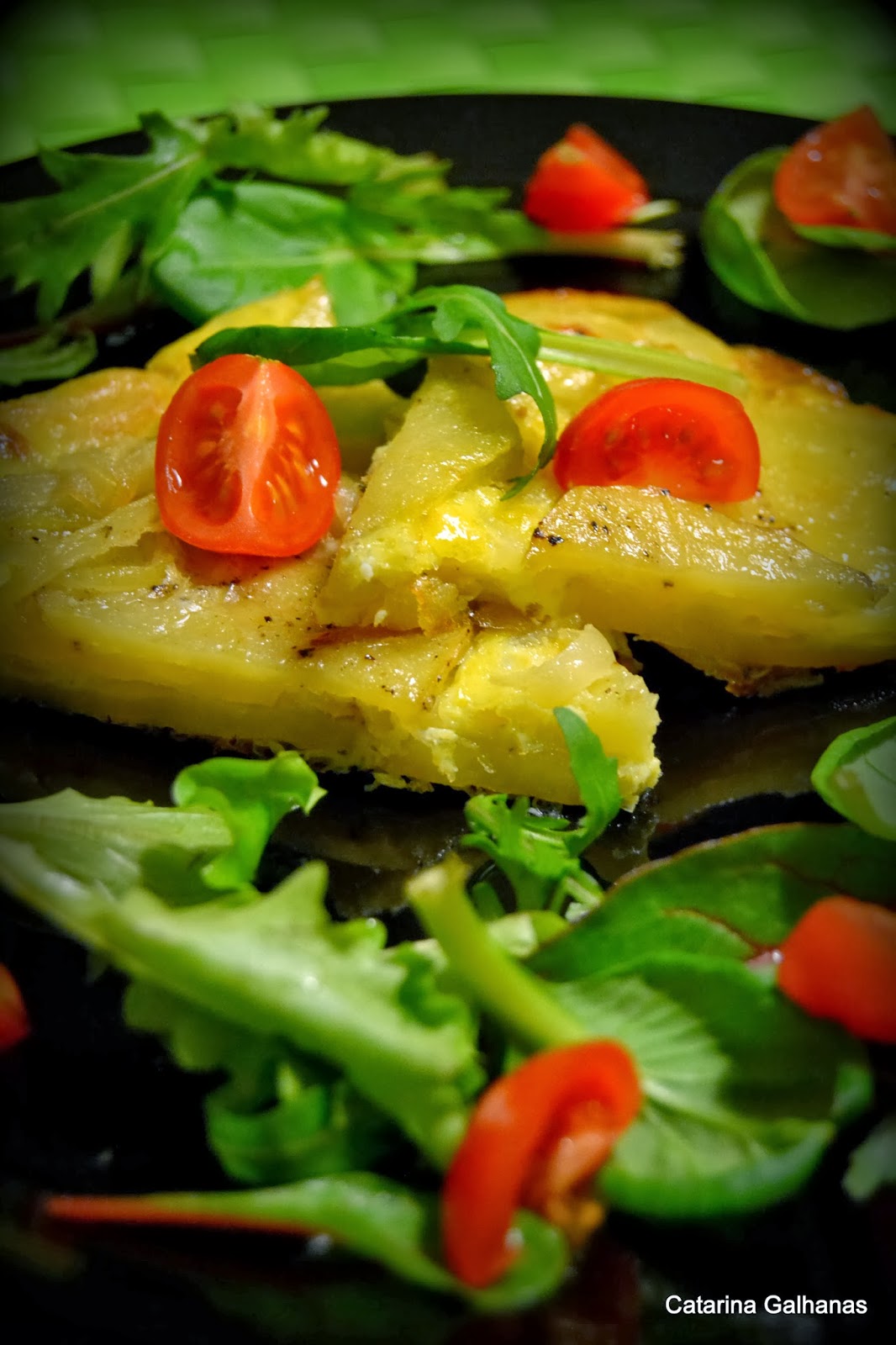
TORTILLA ESPAÑOLA - POTATO & ONION OMELETTE


The tortilla Española is the most commonly served dish in Spain and is served hot or cold, as a meal or as a tapa, on its own or in a sandwich. History documents the tortilla Española as dating back to the discovery of the Americas, although it was initially only made with eggs. In a letter from the conquistador Hernán Cortés to the emperor Carlos V, Cortés explains how the Aztecs sold omeletts of cooked eggs in the markets of Tenochtitlan. The potato, native to South America, was later added to the recipe.


Serves 3
40 minutes
592 kcal per serving


Ingredients
  • 750 g baked potatoes, thinly sliced
  • 4 tbsps olive oil
  • 2 big onions, thinly sliced
  • 6 eggs, beaten
  • Salt and pepper

Method
  1. Place the potatoes in a bowl and season with salt and pepper.
  2. Heat 1 tbsp olive oil in a medium, heavy-bottomed skillet.
  3. Add the potatoes and fry very gently for about 10 minutes until the potatoes are soft but not browned.
  4. Add another tbsp of olive oil, then the onions and fry on a low heat for another 5 minutes.
  5. Toss together the potatoes and onions in the pan and keep the heat as low as possible.
  6. Add the remaining 2 tbsps of olive oil, then pour in the eggs.
  7. Put on a lid and simmer very gently for about 15 minutes until the eggs have set.
  8. If the top of the omelette isn´t set, place the pan in the oven on medium heat until it has set.
  9. Place the tortilla on a plate and serve it hot or cold.

Thursday, December 12, 2013

MOZZARELLA & PESTO TORTILLA PIZZETTA


 Basil, a member of the mint family, originated in India and was brought to the Mediterranean by way of spice routes many years ago. It is an annual herb that relieves indigestion, inflammation and migraines and is known to have a calming effect. It contains vitamins C and K, iron, calcium, and potassium. Pesto is rooted in Genoa, Italy, in the province of Liguria. It dates back to the 16th century as the oldest oily sauce. The word "pesto" originates from the word "pestare", to pound or bruise. Originally pesto was made using a mortar and pestle releasing more of the oils from the basil to give a silkier consistency to the pesto.


Serves 1
15 minutes
203 kcal per serving


Ingredients
  • 1 wholeweat tortilla
  • 2 tbsp passata
  • 1/2 ball of half-fat mozzarella, sliced
  • 2 tsp pesto
  • Torn basil leaves
  • Drizzle of olive oil
Method
  1. Place the tortilla on an ovenproof tray, then top with the above ingredients.
  2. Grill in the oven at 200 degrees for 5 minutes, or until the mozzarella has melted.

Tuesday, August 6, 2013

PASTA SALAD


Serves 4
30 minutes
487 kcal per serving
 
 
Ingredients
  • 310 g small shell-shaped pasta
  • 3 garlic cloves
  • 255 g yellow cherry tomatoes, chopped
  • 255 g red cherry tomatoes, chopped
  • 1 handful black olives, pitted, chopped
  • 2 tbsp fresh chives, chopped
  • 1 handful fresh basil, chopped
  • ½ cucumber, chopped
  • 4 tbsp white wine vinegar, or to taste
  • 7 tbsp extra virgin olive oil
  • sea salt
  • freshly ground black pepper

Method
  1. Bring a large pan of salted water to the boil.
  2. Throw in the pasta and cloves of garlic, boil until al dente, drain and run under cold water to cool.
  3. Put the garlic to one side to use for the dressing.
  4. Put the pasta into a bowl, then add the tomatoes, olives, chives, basil and cucumber to the bowl.
  5. Squash the garlic cloves out of their skins and mush in a pestle and mortar.
  6. Add the vinegar, oil and seasoning.
  7. Drizzle this over the salad, adding a little more seasoning to taste. 

Wednesday, July 24, 2013

GOURMET MAC AND CHEESE


Macaroni and cheese is the ultimate comfort food. As you might expect, mac and cheese traces its roots to Italy, home of many culinary delights. The Liber de Coquina, or Book of Cooking, an Italian cookbook from the 13th century, includes a recipe called de lasanis that foodie historians believe is the first macaroni and cheese recipe. The recipe calls for sheet pasta cut into 50-millimeter squares, cooked in water and tossed with grated cheese, likely Parmesan. From that time, macaroni and cheese grew in popularity across Europe. In colonial America, casserole dishes similar to today's mac and cheese were served at New England church suppers, where they probably originated from recipes, passed along from English relatives. The dish was primarily reserved for the upper classes until the Industrial Revolution made pasta production easier. Historians have often credited Thomas Jefferson with introducing macaroni and cheese to the United States. That probably isn't true, but he did help make it popular. He dined on the dish during his time in Italy and loved it so much that he brought a pasta maker back with him to the U.S. and served the dish at the White House in 1802.


Serves 6
30 minutes
489 kcal per serving


Ingredients
  • 500 g macaroni
  • Salt and freshly ground black pepper
  • Olive oil
  • 1 smal bunch fresh oregano, leaves picked
  • 75 g Parmesan cheese, grated, plus a little extra for grating
  • 75 g Emmenthal or Gruyère cheese, roughly chopped
  • 75 g mascarpone cheese
  • 1/4 nutmeg, grated
  • 1 small ball buffalo mozzarella cheese

Method
  1. Preheat the oven to 200 °C.
  2. Cook the macaroni in a pan of salted boiling water 2 minutes short of the timing on the packet instructions.
  3. Drain in a colander and reserve a little of the cooking water.
  4. Heat a little bit of olive oil in a frying pan, add the oregano and fry for a minute until it starts to crisp up, then turn off the heat.
  5. Add it to your cooked pasta, along with a couple of spoonfuls of the reserved cooking water and the Parmesan, Emmenthal or Gruyère and mascarpone.
  6. Toss and stir around until most of the cheese has melted and you have a gooey sauce. You may need to add a little more of the reserved cooking water.
  7. Season to taste, then tip it all into an ovenproof dish.
  8. Grate over the nutmeg, tear over the mozzarella and sprinkle over the extra Parmesan.
  9. Bake the macaroni cheese in the preheated oven for about 10 minutes, until golden brown and crispy on top.

Monday, July 22, 2013

BRIE STUFFED BEEF TOMATO


A beefsteak tomato (American English) or beef tomato (British English) is any of the largest varieties of cultivated tomatoes, some weighing 450 g or more. This meaty tomato is grown in a rainbow of colors, from vibrant red to pale yellow to purple-black. Rather than maintaining a perfectly spherical shape as it develops, it takes on a decided kidney-bean shape, spreading out to the sides. While popular among home growers for sandwich making and other applications requiring a large tomato to be eaten raw, beefsteaks are not grown commercially as often as other types, since they are not considered as suitable for mechanization as smaller slicing tomatoes. It is one of the slowest-maturing tomatoes, with the largest beefsteak cultivars taking up to 90 days to produce ripe fruit. Typically, the vine will continue to produce and set fruit until the first frost.


Serves 4
45 minutes
342 kcal per serving


Ingredients
  • 4 beef tomatoes
  • 2 tbsp French herbs
  • 1 tbsp olive oil
  • 2 tbsp balsamic vinegar
  • 200 g Brie cheese, sliced
  • 4 tbsp pesto
  • 1 red onion, peeled and sliced

Method
  1. Preheat the oven to 175 °C.
  2. Cut the top of the tomatoes and scoop out and discard their seeds.
  3. Place them on a baking sheet with parchment paper.
  4. Sprinkle with the French herbs and salt, then drizzle with olive oil and balsamic vinegar.
  5. Bake in the oven for 15-20 minutes.
  6. Distribute the brie cheese and pesto in the tomatoes, then top with the onion and bake for another 10 minutes or until the cheese has melted.

Monday, June 24, 2013

CHERRY TOMATOES, SPINACH & MOZZARELLA PIE


In Italy, mozzarella is produced in almost all nation using Italian water buffalo´s milk. The history of the water buffalo in Italy is however not settled. The "most likely hypothesis" is that they were introduced by Normans from Sicily in 1000, and that Arabs had introduced them into Sicily. References to cheese products made from water buffalo´s milk appeared for the first time at the beginning of the 12th century. Buffalo mozzarella became widespread throughout the south of Italy from the second half of the 18th century, before which it had been produced only in small quantities. Production in and around Naples was briefly interrupted during World War II, when retreating German troops slaughtered the area's water buffalo herds, yet commenced a few years after the armistice was signed. In Italian mozzare means to cut.


Serves 8
2 hours
288 kcal per serving
 
 
Ingredients
  • 200 g mozzarella, diced or grated
  • 10 small cherry tomatoes, halved
  • 1 bunch basil
  • 200 g fresh spinach
  • 3 garlic cloves, chopped
  • 1 onion, chopped
  • 5 eggs
  • Salt and pepper
  • 1 tbsp olive oil

Pie dough:
  • 100 g butter
  • 2 dl spelled flour
  • 2 tbsp cold water

Method
  1. Chop the butter, then pinch it together with the flour.
  2. Add the water and work quickly together to form the dough.
  3. Let rest in the refrigerator for 1 hour.
  4. Preheat the oven to 200 °C.
  5. Press the dough into a pie dish and bake for approx. 10 minutes.
  6. Sauté the spinach quickly, just for a few minutes, with the onion and garlic in the olive oil.
  7. Mix all the ingredients for the filling in a bowl. Stir thoroughly.
  8. Pour the filling into the prebaked pie shell.
  9. Bake for 30 minutes or until the filling is firm and the pie golden.
 

Wednesday, April 17, 2013

POTATO KEFTEDES


In traditional Greek cuisine Keftedes are made from ground meat, typically either lamb of beef. It’s combined with a couple finely diced vegetables, spiced, rolled into balls, and either seared or roasted as a shish kabob. This recipe takes the concept, along with many of the flavoring components, and applies it to potatoes rather than meat.

Serves 4
40 minutes
235 kcal per serving


Ingredients
  • 750 g potatoes, peeled and sliced
  • 1 bunch scallions, finely chopped
  • 1 red chilli, seeded and finely chopped
  • 1 tbsp olive oil
  • 1 egg
  • Salt and black pepper

Method
  1. Boil the potatoes in lightly salted water until cooked through, between 10 and 15 minutes.
  2. Pour off the cooking water and mash the potatoes.
  3. Sauté the spring onions and chillies in 1 tsp of olive oil in a skillet on low heat.
  4. Mix it with the mashed potatoes.
  5. Add the egg, then season with salt and pepper.
  6. Shape the potato mixture into 8 patties.
  7. Fry them in the rest of the olive oil in a skillet over medium heat until they are nicely browned, 2-3 minutes per side.
  8. Serve with e.g. tzatziki.

Monday, March 25, 2013

SWEDISH WAFFLES


Waffle Day is a tradition that is celebrated in Sweden, and to a lesser extent elsewhere, on March 25th. Waffles are typically eaten on this day. The name comes from Vårfrudagen ("Our Lady's Day"), which in vernacular Swedish sounds almost like Våffeldagen (waffle day). Our Lady's Day is celebrated on March 25 (nine months before Christmas), the Christian holiday of Annunciation, and the Waffle Day is hence celebrated on the same day although it has no religious connections to Our Lady's Day.


Serves 10
20 minutes
207 kcal per serving
 
 
Ingredients
  • 2,75 dl cold water
  • 3,25 dl wheat flour
  • 1 pinch salt
  • 4 dl whipping cream
 
Method
  1. Preheat the waffle iron.
  2. Mix the water, flour and salt until smooth.
  3. Whip the cream until stiff and fold together with the batter.
  4. Pour about 2 tbsp of the mix onto the hot waffle iron and cook until golden brown.
  5. Serve with eg whipped cream and strawberry jam.

Thursday, January 24, 2013

GREEK SALAD WRAPS


Serves 2
10 minutes
297 kcal per serving


Ingredients
  • 1 large tomato, roughly chopped
  • 50 cm piece of cucumber, cut into sticks
  • 6 kalamata olives, split and stoned
  • 2 very large soft tortilla wraps
  • 50 g feta cheese, cut into sticks
  • 2 tbsp houmous

Method
  1. Warm a pan to a medium heat, then quickly toss in your tortillas one at a time. You don't need to have any oil on the pan.
  2. Make a row of tomato, cucumber, feta and olives down the centre of each warm tortilla.
  3. Spread the houmous around the top and sides of the tortilla.
  4. Fold in the sides to seal in the ingredients and roll up tightly to make a big cigar.
  5. Cut in half and eat with your fingers.

Thursday, January 10, 2013

GNOCCHI WITH TOMATO, SPINACH & MASCARPONE


The word gnocchi may derive from the Italian word nocchio, meaning a knot in wood, or from nocca (meaning knuckle). It has been a traditional Italian pasta type of probably Middle Eastern origin since Roman times. It was introduced by the Roman legions during the enormous expansion of the empire into the countries of the European continent. In the past 2,000 years, each country developed its own specific type of small dumplings, with the ancient gnocchi as their common ancestor.


Serves 4
20 minutes
568 kcal per serving


Ingredients
  • 500 g pack ready-made gnocchi
  • 350 g jar tomato paste sauce
  • 100 g spinach, washed
  • 250 g mascarpone
  • 50 g parmesan or Grana Padano cheese

Method
  1. Cook the gnocchi according to packet instructions and drain.
  2. Heat the tomato sauce in an ovenproof dish and add the spinach, stirring until wilted.
  3. Add the gnocchi, season and spoon blobs of mascarpone over.
  4. Scatter with shavings of parmesan or Grana Padano and grill until bubbling and golden.

Sunday, November 4, 2012

GREEN CLUB SANDWICH


Serves 1
10 minutes
583 kcal per serving


Ingredients
  • 3 slices wholegrain or rye
  • 3 tbsp ready-made houmous
  • 1 small avocado, stoned and sliced
  • 1 handful rocket leaves
  • 8-12 cherry tomatoes, sliced

Method
  1. Spread the houmous evenly over one side of each slice.
  2. On one slice of bread, lay half the avocado, rocket and tomato.
  3. Season with salt and pepper, then cover with another slice.
  4. Pile on the rest of the avocado, rocket and tomato, season again and top with the third slice.

Wednesday, September 12, 2012

WHITE BEAN DIP


Serves 2


Ingredients
  • 1 can large white beans (410 g)
  • 1 garlic clove garlic, crushed
  • 1 cup water + 1/4 vegetable stock cube
  • Salt and pepper

Method
  1. Strain the beans and pour them into a saucepan.
  2. Add the garlic, water and stock cube and cook for 5-10 minutes.
  3. Blend to a smooth dip, then season with salt and pepper.
  4. Serve with e.g. grilled vegetables (I used zucchini, aubergine and red bell peppers).

Wednesday, June 6, 2012

PIE WITH MUSHROOMS AND RICOTTA


Serves 6
1 hour 15 minutes


Ingredients
  • 60 g butter
  • 270 g button mushrooms, sliced
  • 2 garlic cloves, crushed
  • 1 tbsp Marsala wine
  • 1 tsp fresh thyme leaves
  • 1/2 tsp fresh rosemary leaves
  • 1 pinch ground nutmeg
  • 5 sheets phyllo pastry
  • 75 g butter, melted
  • 200 g of ricotta
  • 2 eggs, lightly beaten
  • 125 g crème fraiche
  • 1 tbsp fresh parsley, chopped


Method
  1. Set the oven temperature to 180 °C.
  2. Melt the butter in a skillet and add the mushrooms.
  3. Fry them on high heat for few minutes until they become soft.
  4. Add the garlic and fry for another minute.
  5. Stir in the wine, thyme, rosemary and nutmeg.
  6. Lift the mushrooms and drain them.
  7. Unfold the phyllo pastry sheets very carefully and work with one sheet at a time. Let the rest lie in a damp kitchen towel so they don´t dry.
  8. Brush the sheet with the melted butter and fold them in half, then place them on top each other in a low pie plate with removable bottom, letting the sheet corners hang over the edges.
  9. Whisk together the ricotta, eggs and crème fraiche, then season with salt and pepper to taste.
  10. Spoon half of the batter into the pie shell and add the mushrooms.
  11. Spread the rest of batter on top, then bake for 35 minutes or until the filling has hardened.
  12. Sprinkle with the parsley and serve with a salad.

Saturday, May 26, 2012

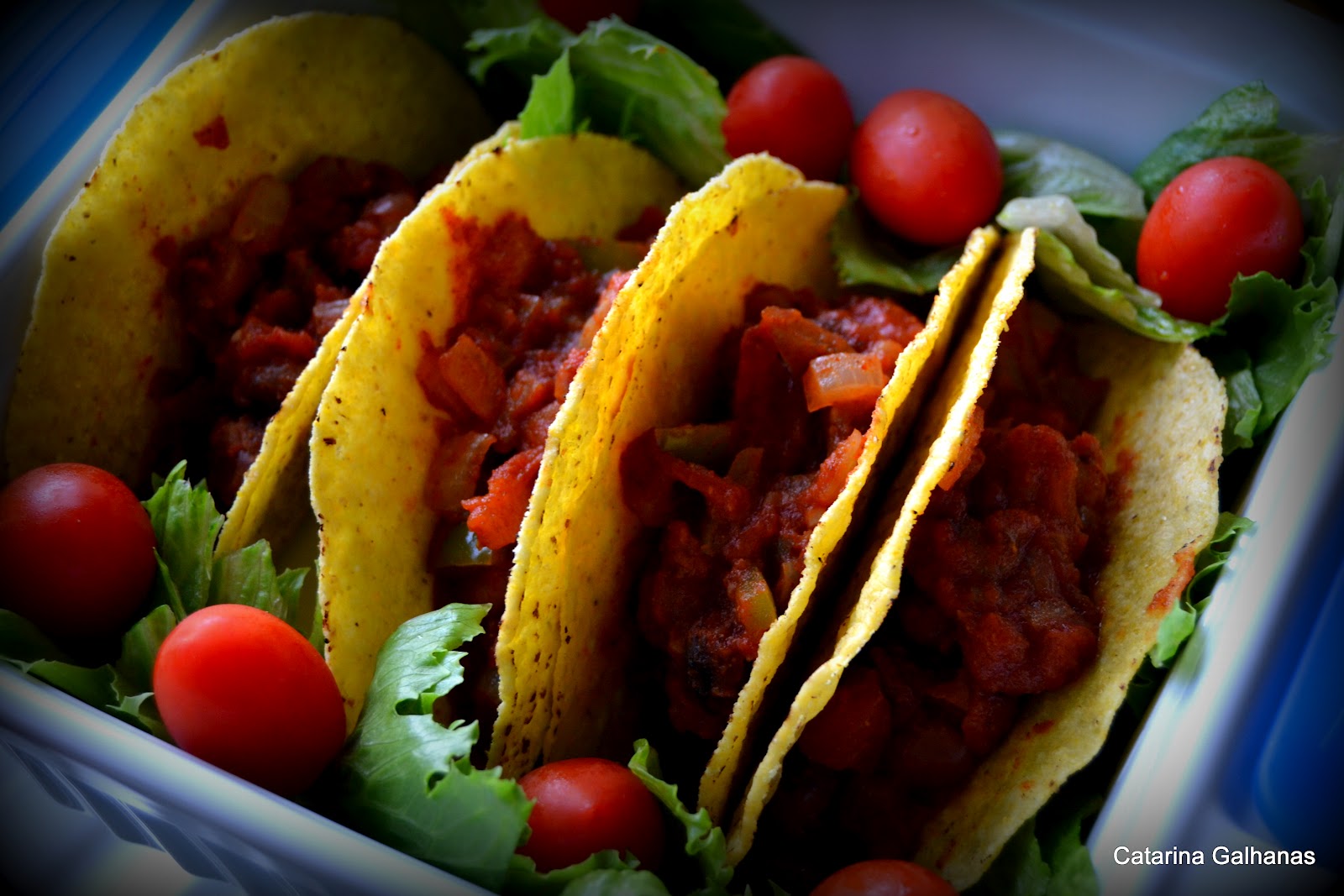
VEGETARIAN TACOS


Serves 4
380 kcal per serving


Ingredients
  • 3 dl beans, your choice
  • 1 yellow onion, chopped
  • 1 garlic clove, finely chopped
  • 1 green bell pepper, chopped
  • 1 tbsp olive oil
  • 2-3 tbsp chili powder
  • 1 tsp cumin
  • 1 can (400 g) chopped tomatoes
  • 1 tbsp coffee powder (optional)
  • 1 tbsp brown sugar
  • 1 tsp oregano
  • 16 hard taco shells

Method
  1. Sauté the onion, garlic and bell pepper until almost soft in a saucepan.
  2. Stir in the chili powder and cumin and let it fry for 4-5 minutes.
  3. Stir in the crushed tomatoes, coffee, sugar, oregano and simmer for approx. 10 minutes. Stir occasionally.
  4. Mix in the beans at the last minute, then season with salt and pepper.
  5. Serve with hard taco shells or a mixed salad.

Sunday, April 8, 2012

AUBERGINE MELTS


Serves 4
30 minutes
213 kcal per serving


Ingredients
  • 3 tbsp olive oil
  • 2 aubergines, halved lengthway
  • 4 tomatoes
  • 1 x 150 g ball mozzarella, drained
  • Handful basil leaves

Method
  1. Heat oven to 200 °C.
  2. Drizzle the oil over the aubergine and bake in the oven for 25 mins until softened.
  3. Meanwhile, slice the tomatoes and mozzarella, then arrange on top of the aubergine.
  4. Return to oven for another 5 mins or until the cheese has melted.
  5. Scatter over some basil leaves.
  6. Serve with couscous and green salad